
Reflections of Lilje Damselfly
I’ve virtually always been creating stories. When I was barely 4 years old, I drew “dinosaurs” on a handful of loose papers and made doodle letters on each page. I then stole a stapler from my mum’s drawer and stapled them together to create a picture book like the ones my parents read to me every night. I’m sure my parents were equally horrified and impressed as they still speak about it today, some 30 years later!
I did however take a fair while to learn to read and write, I was nearly 8 before I cracked the code but then within a few years, I was reading everything I could get my hands on, and got in trouble in school for taking books for much older kids from the school “library” – I went to a very small school so our library was really just 2 small bookshelves. My parents had to speak to both my teachers and the librarians at the village library to get me permission to read not only books for teenagers but by 10 all the “adult” fantasy and historical fiction books too, as I had exhausted the kids and teen sections. I started writing many stories during those early years, but they were mostly fanfiction of my favourite books. My dad read everything I wrote and gave me feedback on how to improve with enough praise, I always wanted to keep writing and he often encouraged me to invent new worlds too.
I never finished any of those early stories but by 15, I decided I would finish my next project and not allow myself to start anything else until I did so. It took me over a year, but I did finish what I suspect is just a thinly veiled Lord of the Rings fanfic. I wrote a handful of other novels the next 2 years, all of these in my native Danish, until I discovered writing craft books and learnt I was writing “wrong” since I didn’t outline before drafting. It took me nearly 10 years to come back around to realising I write best without an outline and I was in my mid-twenties before I started finishing my projects again. I haven’t looked back since and still don’t outline any novels before I draft them.
History, especially the pre-industrial world, is one of my many special interests so I’ll take any excuse to dig into specific times, places and professions. Reflections of Lilje Damselfly is of course post-industrial since it’s set in 1905, but I do also have a soft spot for the Edwardian Era simply because I adore the English fashion at the time and electricity and cars weren’t yet that well-established.
Writing Reflections of Lilje Damselfly I got the chance to do further deep dives into spa culture, which was on the decline in the early 1900’s, as well as the fashion and it was the perfect mixture for me although I didn’t end up using very much of the research in the book itself and most of the research was done simultaneously to writing since I began drafting not 3 weeks after the initial dream that sparked the idea for the story.
For other historical fiction works, I tend to spend months researching before I feel ready to write. Even if I have the main characters ready and waiting, I often struggle to see where to start the story until I have enough of an understanding about the specific time and place, I feel the story is supposed to exist within.
I’m lucky that I not only have a university degree that taught me rigorous research methods, but I also still work for a university, so I have access to a lot of journal articles many others sadly don’t have. I enjoy perusing both the more scientific articles alongside blogs and historical archives and websites so I can collate a more complete picture of the world at the time a story is set.
For me, writing a story is mostly about the character journey so if I know everything there is to know about the world beforehand, I can focus on getting those characters developed and fleshed out without having to get stuck on details every other paragraph when I need a sentence about the room, clothing, cultural norms of the situation etc.
I’ve been very fortunate that my memory for recalling facts and knowledge hasn’t deteriorated nearly as much as my ability to remember fiction has. I can almost always repeat back information I’ve read several months or even years ago, but I couldn’t tell you the plot of the book I finished reading last week – that’s vanished in the brain fog somewhere.
It probably does for most people, but I didn’t go into Reflections of Lilje Damselfly with an agenda to write it as an allegory for receiving a long covid or fibromyalgia diagnosis. I wasn’t entirely sure it was going to be about chronic illness when I started writing the opening lines. I think I tend to focus so much on the main character(s) I’m a bit too close to see the bigger picture until after I’ve finished drafting and return to the manuscript after a few months working on something else.
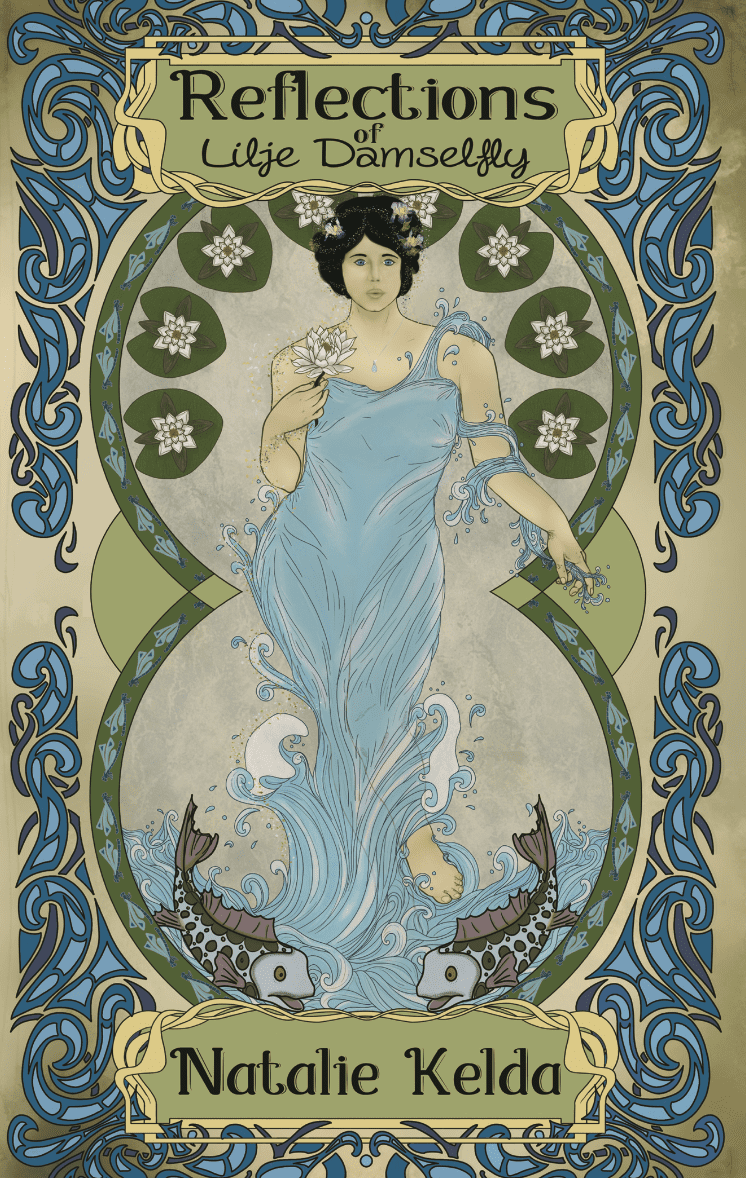
With Lilje Damselfly, I did start to see the threads even as I was drafting, but I never wrote it with the aim to publish, it wasn’t until nearly 5 months after I finished drafting before I decided to try my hand at drawing the cover I had in my mind and it was only in case I could match that vision I would publish.
As luck would have it, the 3 years I’d been practising digital art came to my rescue, alongside some valuable feedback from artist friends, especially Alexander Way-B who was the first to see the full early drafts and give pointers to the ways I could perfect and hone the artwork. Once I knew the cover would come out exactly as I had dreamt of, I knew I needed to publish the book because it had helped me personally simply through me writing it.
It actually saw very few edits beyond the line-level details and my biggest challenge was the ending. I really wanted to add more of Lilje’s life after the spa but she simply refused to tell me anything at all and that’s why it ends where it does, because the story was about her time at the spa and her time coming to terms with her chronic illness, it’s ultimately not about the romance or any other plot threads.
So, in a way, my inability to write a longer/different ending probably strengthened the story’s allegorical value as it kept the scope quite narrowly on chronic health issues and the struggles that come with them.
I say this quite often but please practice patience and take your time. I understand the urgency when you’re starting out, the longing to present your story to the world but try to set it aside just a little bit longer. To send it to just one more round of beta readers, to not rush the process.
You will be thanking yourself later, especially if you can write a few short stories or even another novella or novel before diving back into your first project to edit it. Not only will the break help you get distance that will allow you to edit more effectively, if you draft, beta read or edit something else before returning to your first draft, you will have learned new things you can then apply while editing your first project.
I LOVE indie books, it’s 80% of what I read, 95% if we don’t count old re-reads like Discworld, but the vast majority needed just one more polish, another line editing round to tighten up the prose or another read-through to catch continuity errors like changing eye colours or cuts and bruises moving from the left to the right and back again. Indie authors have the most incredible fresh and fun ideas but we don’t have giant teams behind us so we need the time to ensure our stories can shine as brightly as they’re meant to. But also, and more importantly, have fun writing (I know, it’s a cliché but it’s true). Write what brings you joy and excitement whether that means writing to the fickle and ever-changing market or writing the most niche and strange stories you can, just make sure you’re enjoying it.
Publishing can be rough and quite demoralising, so I highly recommend you find yourself a group of like-minded writers. The community is vast, helpful and so welcoming. Make friends and have fun with them and with your own creativity, that’s what makes it worth it, not how many books you sell.