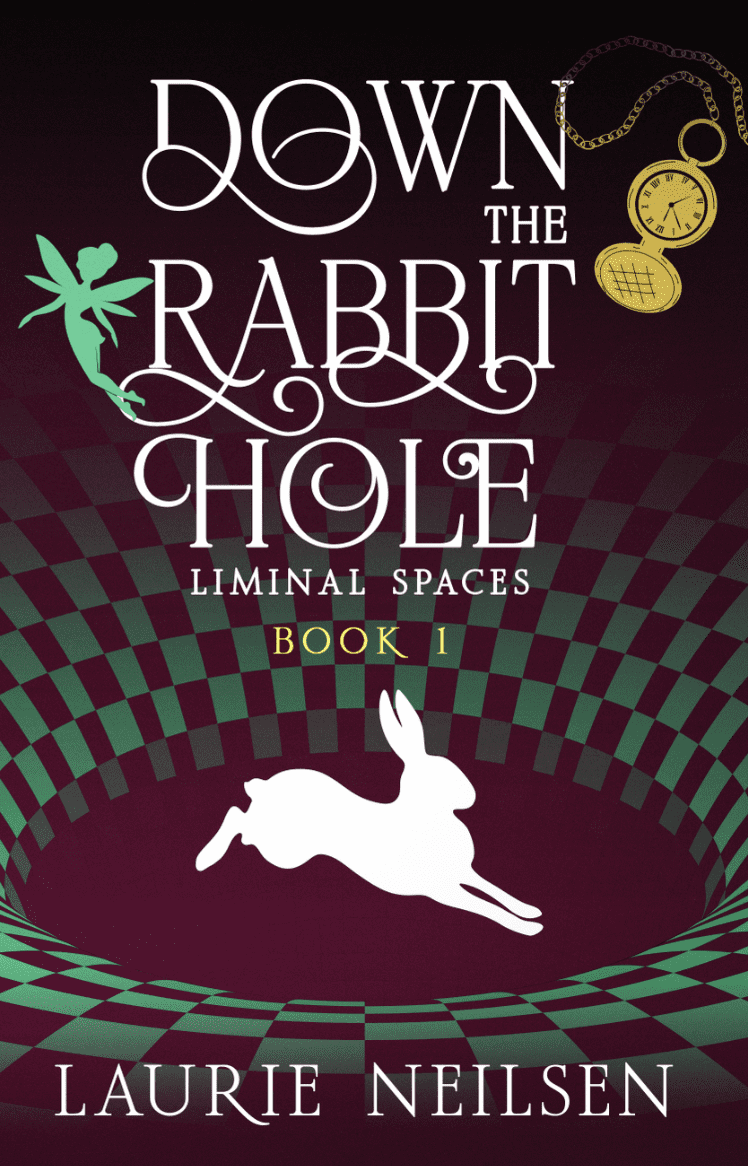

Down the Rabbit Hole
Throughout public school and college, I had many teachers who told me I should become a writer. For thirty years, I tried and failed to come up with ideas for a novel. It wasn’t until a couple of friends of mine self-published novels that I realized I could do it, too. Then I lost a few people who were all my age and quite dear to me in the span of one year. It got me thinking about death how it changes the people who are left behind. Suddenly, the pieces of stories I’d had floating in my head all coalesced into a cohesive narrative.
It came from a few sources. I loved the movie Labyrinth as a kid, and watched it countless times. The idea that pixies are little jerks that bite came from that movie, and Labyrinth is the inspiration for the second book coming up in my series, Under Ground. I loved the art so much I collected a few books about faeries by Brian Froud, the artist who worked with Jim Henson to create Labyrinth and The Dark Crystal, another fantastic fantasy movie.
I’m also a huge geek, and I’ve been larping (live action role playing) in a system called White Wolf’s Changeling: the Dreaming since the year 2000. It blends folklore with modern gaming mechanics to create a really fun, weird game. I’ve made a lot of friends playing it.
I took all of that, along with a lot of research into folklore, and chose what I liked to build my own version of faeries and how they work. I’ve even written an explanation of the biochemical reaction of iron in the body of someone who has fae DNA and why it doesn’t kill them. I don’t just think things through; I overthink them through.
The biggest hurdle was a lack of self-confidence. Is my writing good enough? Will anyone want to read this? Fortunately, I have a kind of support group, a Discord group of local writers that’s also our publishing co-op, Caffeinated Terrier Press. I shared the occasional snippet of writing, and they loved what I shared. They were there to cheer me on and encourage me. I also saw some examples of really terrible writing that got published the traditional way and thought, “Well, if they can do it, I can do better!”
It’s not too late. I didn’t self-publish my first book until I was 48 years old, and I love it. I’m so proud of it, I call it my baby. You’re not too old to start. If you have an idea, start writing. Start making notes, making an outline, whatever your process is. If you have a story to tell, just get started and see where it goes.
I started with notes to plot out the story arc, the characters, how the magic system works, what kinds of faeries exist, and where it was all going before I wrote the first chapter. Some authors just dive right in and start writing. That’ll depend on how you like to organize your projects. I’m very detail oriented, so I have pages and pages of notes. I have a calendar that maps out when each chapter happens. That’s just me. I need it to feel grounded and real so you can imagine yourself living in the world I’ve created.
I probably have more advice. My degree is in art education, so I’m naturally a teacher. The important thing is that you let your creativity flow. It’s human to create. A lot of people are outsourcing creativity to ai, and that’s sad. It’s not just taking valuable resources from the environment, like way too much water and electricity. It’s taking away one of the things that makes us human, the ability to express ourselves. If you have something to say, make sure you say it yourself.