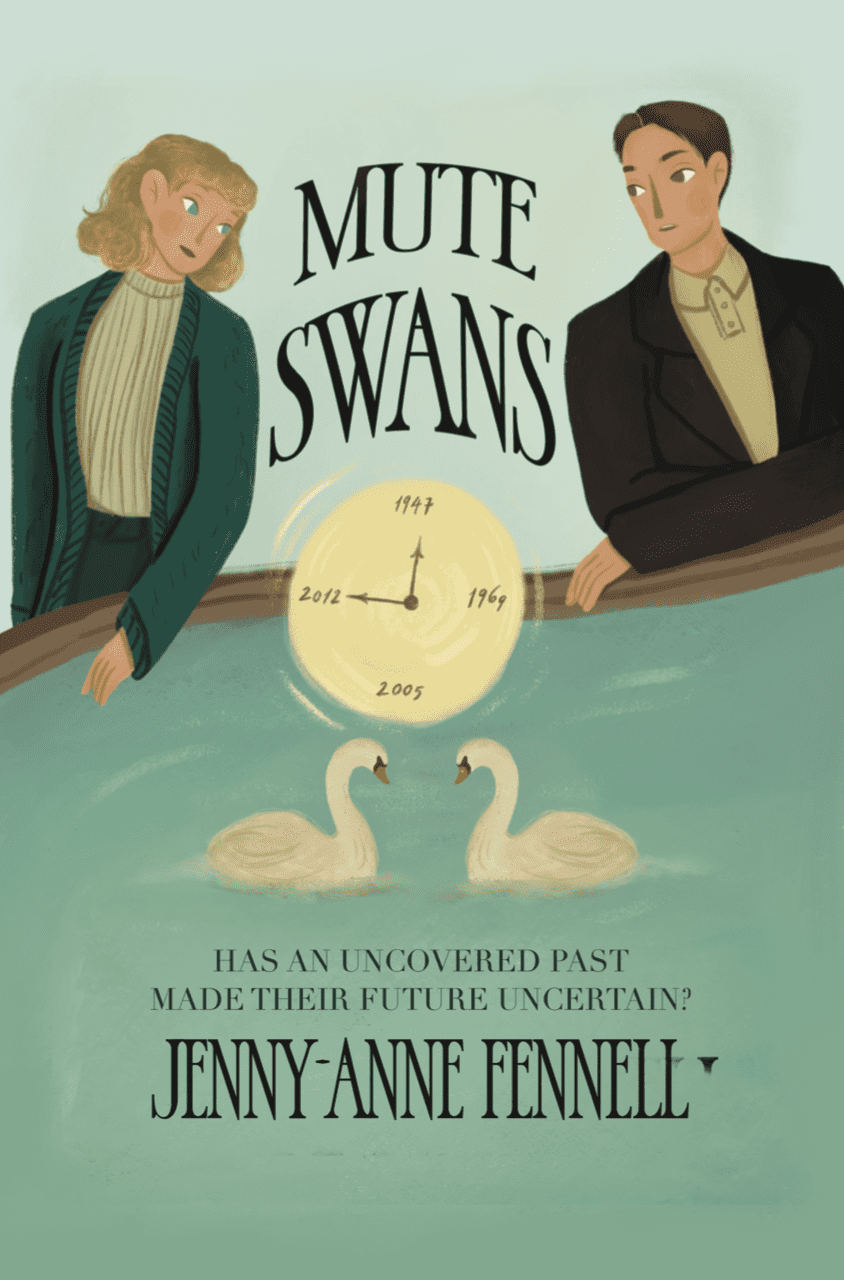

Mute Swans
I learned to read early, according to my mother, and I began writing not long after. My first small success was winning a primary school writing competition sponsored by the local water company. I don’t remember what I wrote, but I do remember travelling to receive the prize in a rare outing with my father. The prize was a book about water, fittingly, and I still have it.
I visited the local mobile library twice a week at that time: once with school and once to choose books for my parents, neither of whom could get there themselves. I grew up surrounded by books and, in different circumstances, might have followed a writing path straight away. But life intervened, as it often does.
I left school with virtually no qualifications and worked in a succession of clerical roles, the last of which was as an assistant in a community library. I left to have my first daughter. When my second daughter started school, I began studying again and, over many years, gained the qualifications to become an English Literature teacher. I had completed creative writing courses too, though my focus was largely poetry, something I loved teaching.
Later, I returned to university to complete a master’s degree in creative writing. The opening of Mute Swans began as my dissertation piece. Life intervened once more, and it was several years before the story was finished. I submitted it to agents and received encouraging feedback, but was told the novel wasn’t in a genre that would sell as a debut. I was advised to write something else and keep Mute Swans for later.
It was good advice, but after spending years finishing the novel, I wasn’t ready to set it aside. Instead, I did something completely different and began learning dressmaking during the Covid lockdown. With no one to share that interest locally, I started a small Facebook group. It gradually grew into regular social meetups, and eventually, we were fortunate enough to be offered café space in our local Waterstones.
Surrounded by books once again, my writing spark quietly returned. Mute Swans was rescued, re-edited, and self-published. I’m now writing my next novel, this time entirely on my own terms.
I didn’t want to shy away from realism in Mute Swans, so I accepted from the outset that there would be both light and heavy moments. The novel touches on difficult areas — questions of knowledge and consent within relationships, what fidelity truly means, and the way assumptions between partners can shift over time. It also spans generations, and with that inevitably comes loss. None of those elements felt avoidable, nor did I want them to be.
Finding balance came partly through structure. Moving between timelines allowed me to give readers space. When one thread grew emotionally intense, another period could offer perspective or contrast. That movement helped prevent the story from becoming weighted in one direction.
The intimacy, though, came from staying close to one family. By tracing their lives across decades, I could show how small choices echo, how private moments reverberate, and how societal change quietly shapes personal decisions. I was always conscious that the story itself had to remain front and centre. If the structure became too visible, it would risk pulling the reader out of that closeness. So the real balancing act was ensuring that the craft supported the characters rather than drawing attention to itself.
That’s an interesting question, because while none of the characters are me, aspects of them inevitably are.
I wanted each generation to feel recognisable, with strengths and flaws that readers might see in themselves. Miriam is older than I am, but closest to me in life stage, and I did give her one of my own weaknesses — the tendency to prejudge situations and occasionally get things wrong. I think that capacity for misjudgement makes characters more human.
The humour in the novel is also mine. I kept it subtle and sparing, because humour is such a personal thing; I prefer it to sit lightly in the background, there if readers notice it, but never forced.
I’m also drawn to the idea that it’s never too late to change direction. I haven’t always done things at the expected time in my own life, and that belief found its way into Mute Swans. Several characters are given a second chance, either educationally, emotionally, or romantically. While I know not every story can end neatly, I do believe people can find their way to something better.
My advice would be to enjoy the process and focus on the craft first and foremost. Try not to think about publishing in any form until you’ve found your voice — until what you write feels you. That takes time.
It’s important to have your work read and critiqued by people who aren’t related to you and don’t feel obliged to be kind. That can be difficult, but it’s a necessary part of growth. At the same time, be clear about what you want to achieve. A traditional publishing contract can be hard to secure, and while luck sometimes plays a part, it isn’t something you can control.
Self-publishing is a wonderfully accessible option for anyone who wants to see their work in print. But it isn’t an easy route to financial or critical success. Genre choice can influence outcomes, especially in the short term, and whichever path you take, marketing matters. Even books in popular genres need visibility.
Publishing, in any form, should be an informed choice. It isn’t always straightforward, but there is something extraordinary about holding your first book in your hands.